
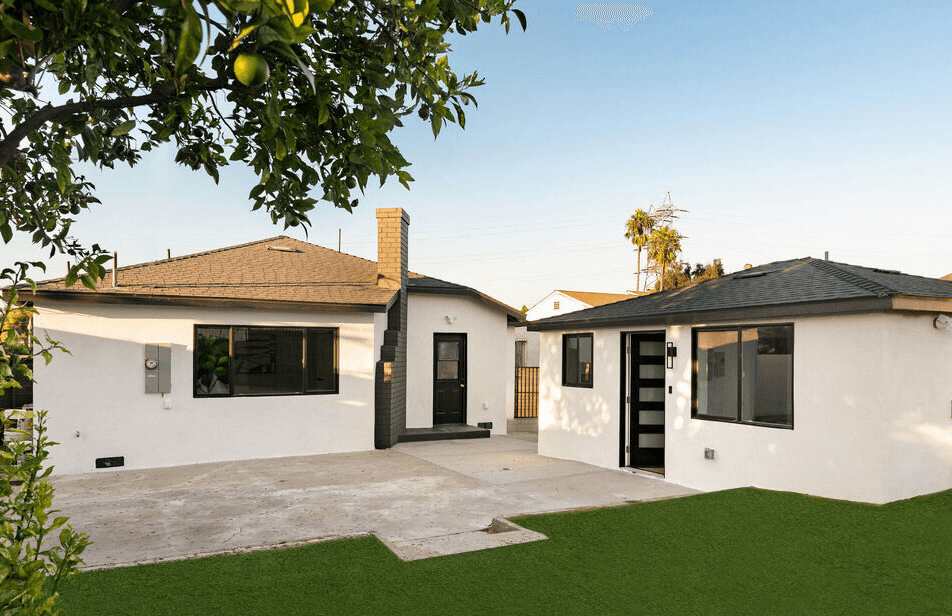
A Junior Accessory Dwelling Unit (JADU) is a compact living unit created entirely within the existing footprint of a single-family home. JADUs provide a practical and cost-efficient way to add independent living space without additions or new construction.
This ADU type is specifically designed for homeowners who want to maximize interior space while maintaining close connection to the primary residence.
[
01
]
Defintion
What is a JADU?
A JADU is a small accessory dwelling unit, typically up to 500 square feet, created within an existing single-family home. It may be carved out of existing rooms or repurposed space and includes a dedicated sleeping area, living space, and efficiency kitchen.
Unlike other ADU types, JADUs are regulated separately and come with specific requirements related to size, ownership, and occupancy.
Housing for Family Members
JADUs are often used to house extended family members, providing privacy while keeping occupants close to the main household.
Affordable Long-Term Rental Space
JADUs may serve as long-term rental units, offering supplemental income while maintaining owner occupancy on the property.
Caregiver or Support Housing
A JADU provides a practical living option for caregivers who need proximity to the primary residence.
Flexible Work From Home Spaces
Depending on layout and local regulations, JADUs can function as flexible-use living areas or home offices with limited residential features.
[
02
]
Benefits
[
03
]
JADU Options
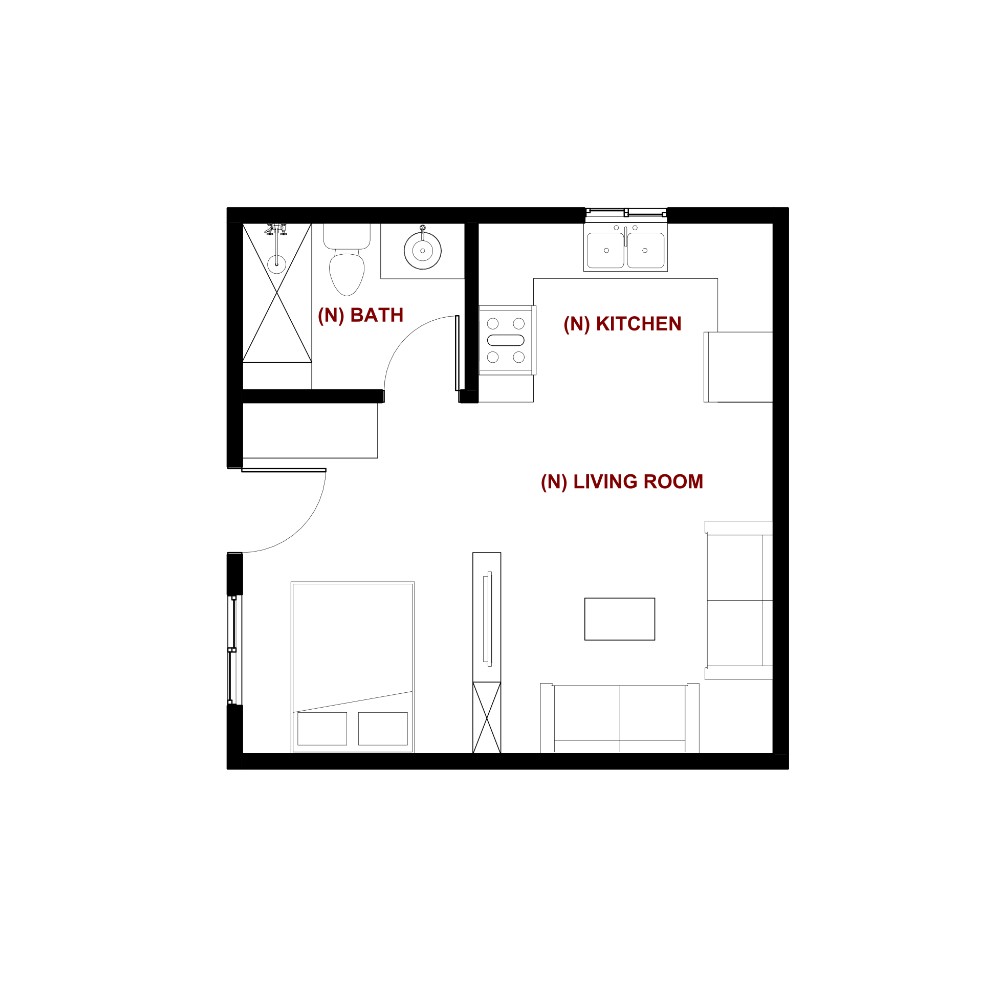
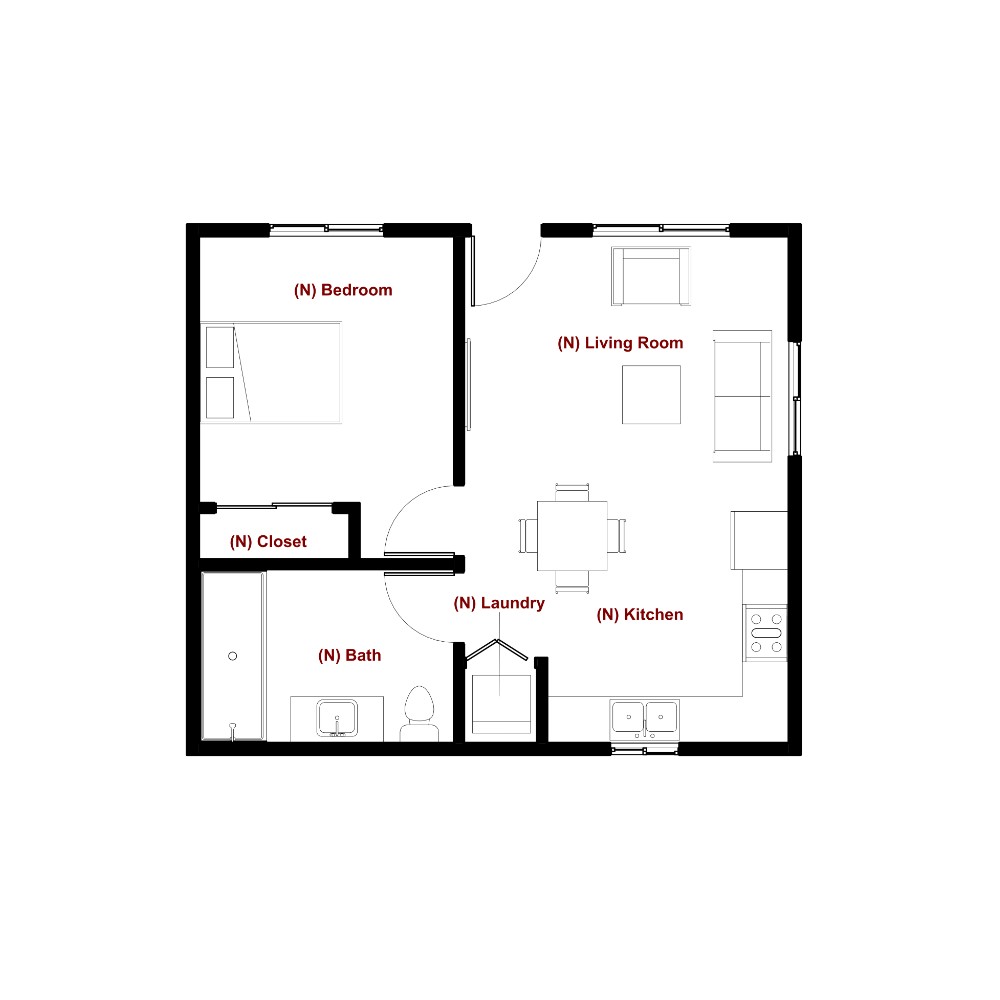
They include an efficiency kitchen and may share bathroom facilities with the main home, depending on design and local requirements.
[
04
]
FAQ
What is a JADU?
A Junior Accessory Dwelling Unit (JADU) is a small residential unit created entirely within the existing footprint of a single-family home, typically limited to 500 square feet.
How is a JADU different from a standard ADU?
A JADU is smaller, located within the main home, and subject to different regulations, including owner-occupancy requirements and the use of an efficiency kitchen.
What is the maximum size allowed for a JADU?
JADUs are generally limited to a maximum size of 500 square feet. The exact allowable area depends on existing interior conditions and local regulations.
Does a JADU require a full kitchen?
No. JADUs are typically required to have an efficiency kitchen, which includes limited cooking appliances and storage rather than a full kitchen.
Can a JADU share a bathroom with the main house?
Yes. JADUs may share bathroom facilities with the primary residence, depending on design and local code requirements.
Are utilities shared for a JADU?
Yes. JADUs typically share water, sewer, electrical, and HVAC systems with the main home, and separate utility meters are usually not required.
Is owner occupancy required for a JADU?
In many jurisdictions, the property owner is required to live on-site in either the primary residence or the JADU. Owner-occupancy requirements are reviewed during the planning phase.
Can a JADU be rented out?
JADUs are generally permitted for long-term rental use. Short-term rentals may be restricted or prohibited depending on local regulations.
Does a JADU require additional parking?
Additional parking is often not required for a JADU, particularly when created within the existing home footprint. Requirements vary by location.
Is a JADU the right option for my property?
A JADU may be the best option when interior space can be efficiently reconfigured, budget is a priority, and owner occupancy is acceptable. A feasibility review helps confirm eligibility.