Kitchen Remodeling Guide: Materials, Layout, and Design Decisions
Kitchen
Remodel
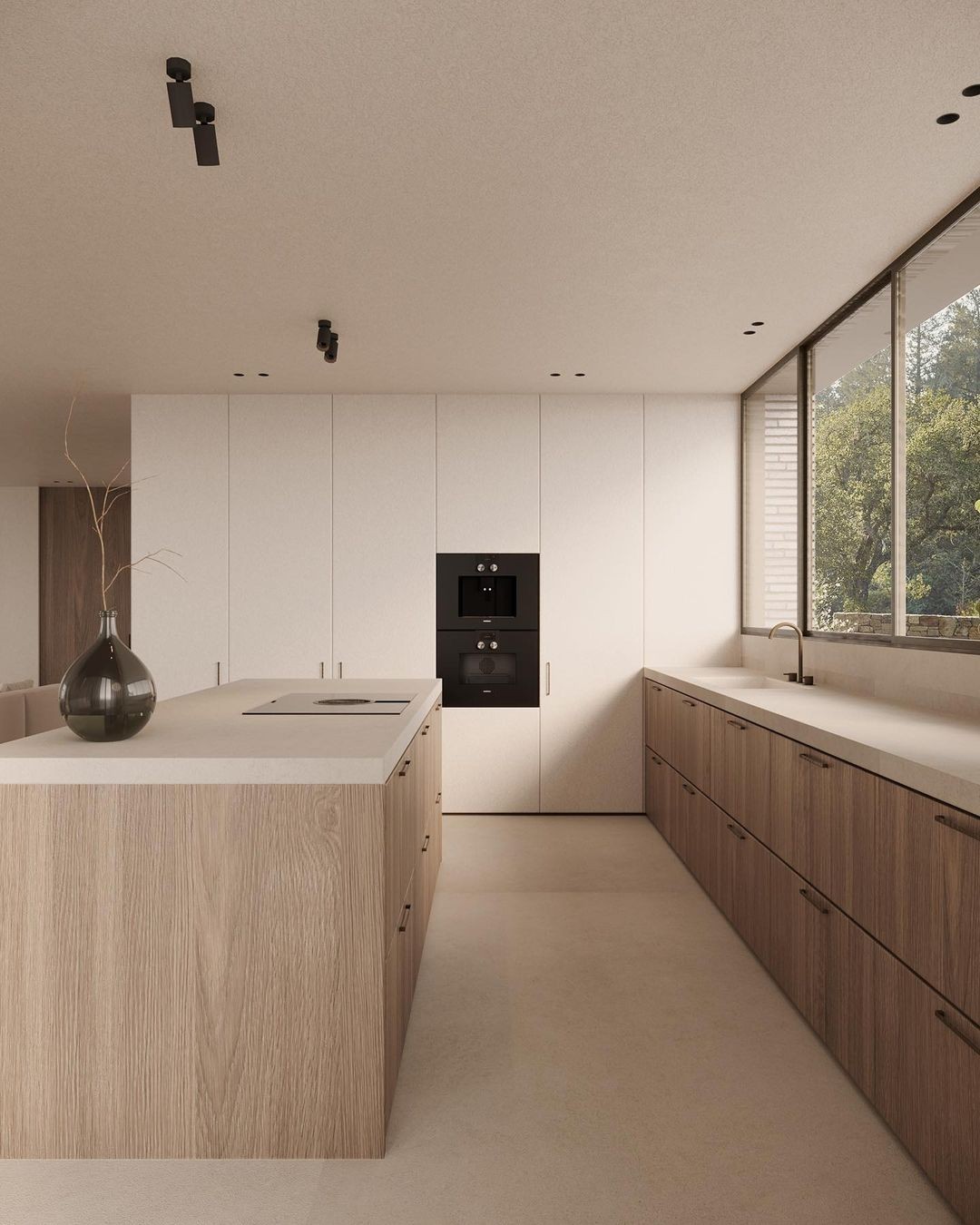
A kitchen remodel is one of the most impactful upgrades in a home. Beyond aesthetics, a well-designed kitchen improves daily workflow, durability, and long-term value. Successful projects balance material selection, layout planning, and realistic budget expectations.
This guide breaks down the most important design and construction considerations, from cabinetry and countertops to kitchen flow, appliance placement, and installation complexity.
Choosing Cabinet Finish Materials
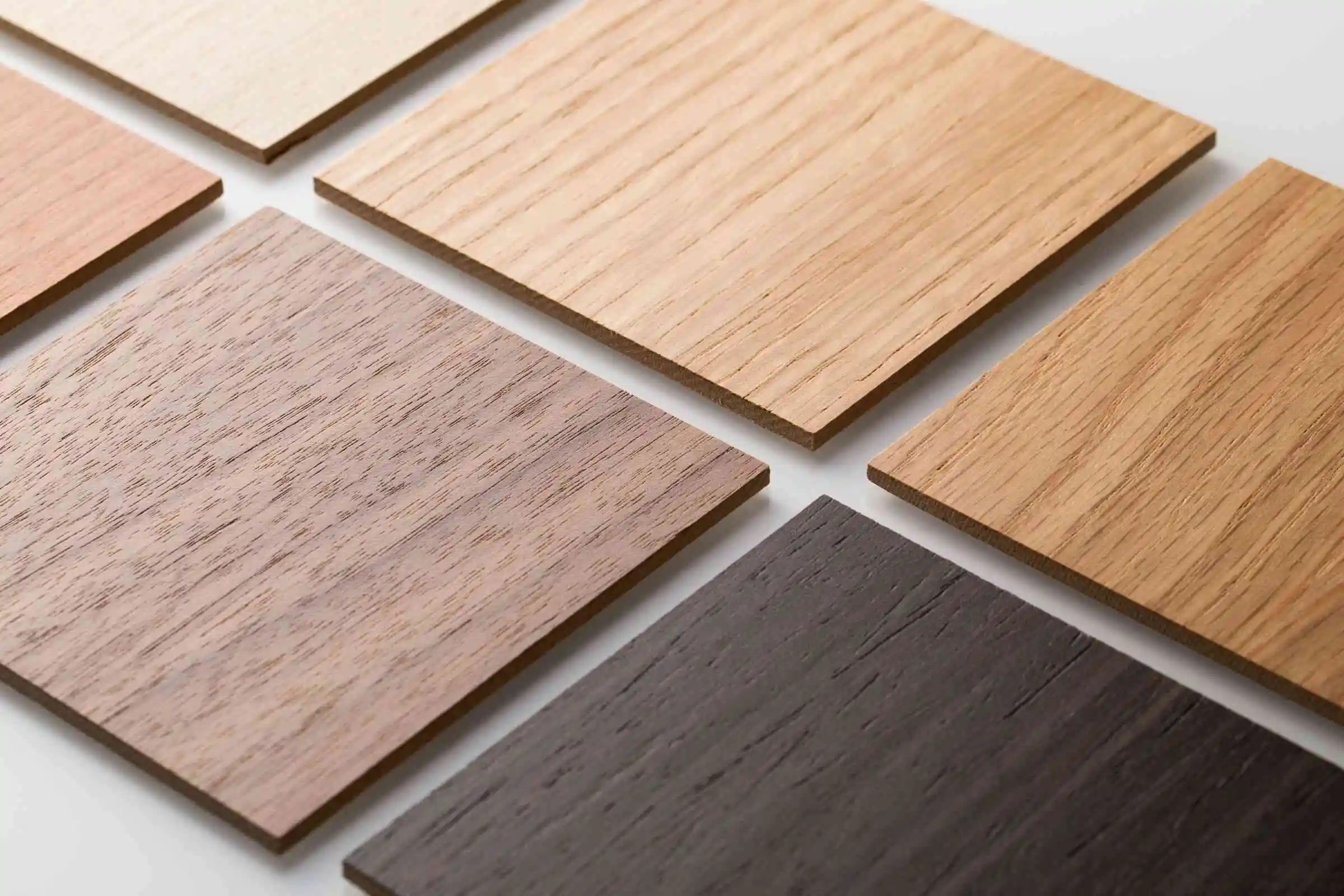
Cabinetry typically represents the largest visual and budget component of a kitchen. Finish material affects durability, maintenance, appearance, and cost.
Material | Appearance | Durability | Cost | Notes |
|---|---|---|---|---|
MDF with paint | Smooth, modern | Moderate | $ | Best for painted finishes, prone to moisture damage if poorly sealed |
Plywood with Veneer | Natural wood look | High | $$ | Stable and durable, common in semi-custom cabinets |
Soild Wood | Traditional, textured | High | $$$ | Expands/contracts with humidity, shows grain and joints |
Thermofoil | Seamless, modern | Moderate | $ | Can peel near heat sources |
Laminate | Flat, contemporary | High | $-$$ | Durable and low maintenance, limited edge detailing |
Design Tip: Painted finishes highlight door profiles and seams. Wood veneers emphasize grain consistency and feel warmer in traditional or transitional kitchens.
Countertop Material Selection
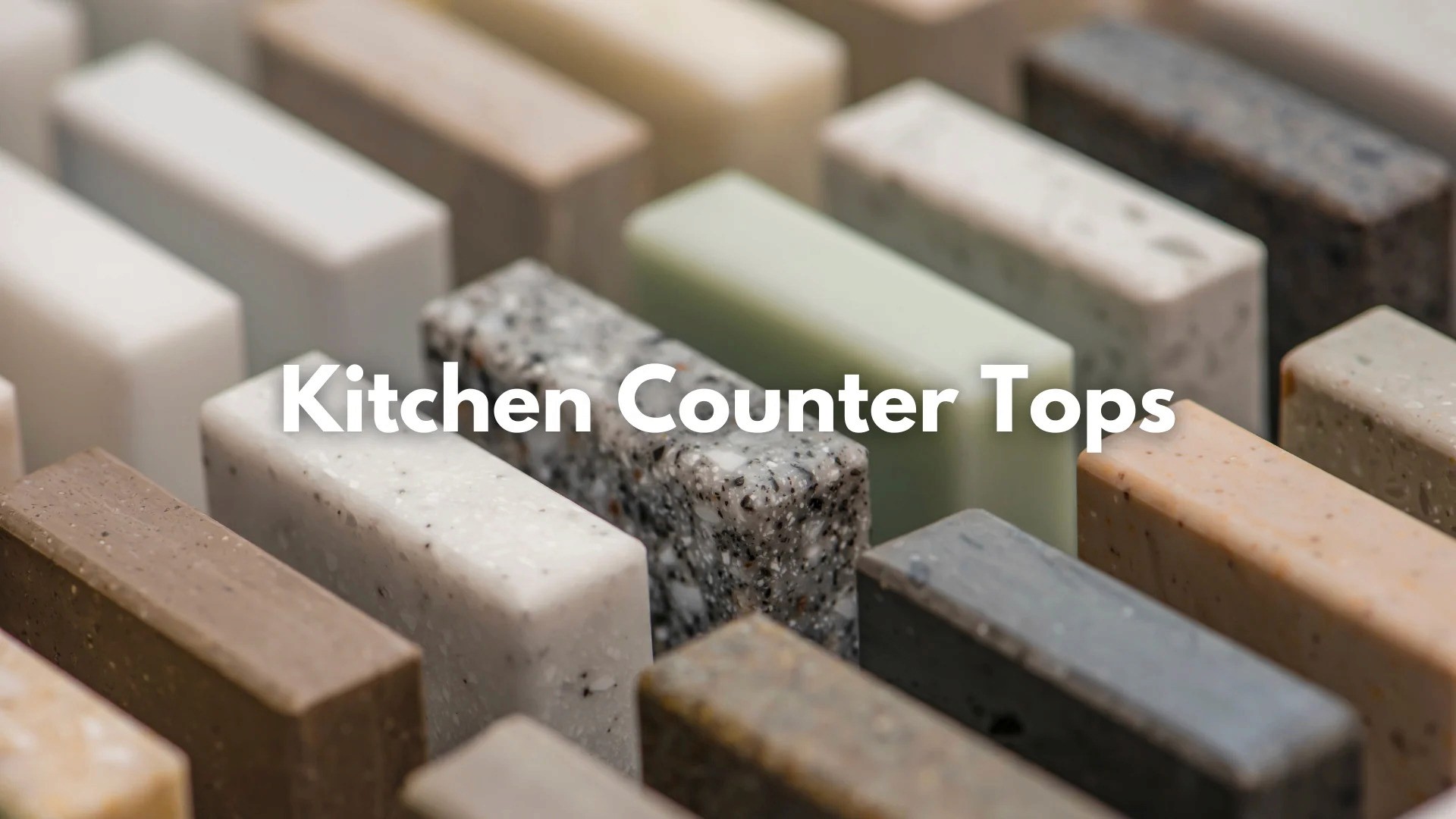
Countertops experience the most wear and should be selected based on durability, maintenance, and visual compatibility with cabinetry.
Material | Heat Resistance | Scratch Resistance | Maintenance | Cost |
|---|---|---|---|---|
Quartz | High | High | Low | $$-$$$ |
Granite | High | Moderate | Medium | $$-$$$ |
Marble | Moderate | Low | High | $$$ |
Laminate | Low | Low | Low | $ |
Porcelain Slab | Very High | Very High | Low | $$ |
Color Theory in Kitchen Design
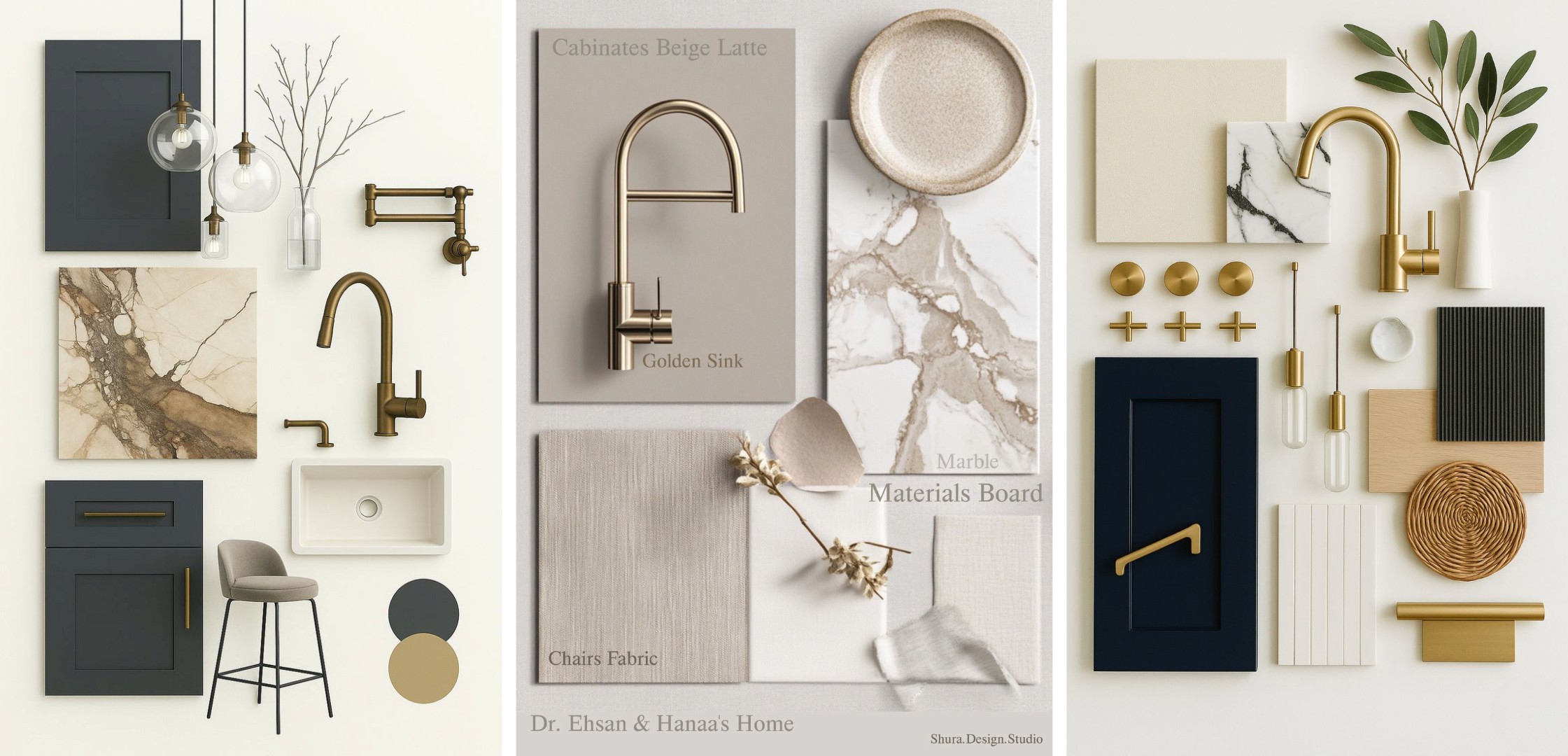
Color impacts perception of space, cleanliness, and warmth. Kitchens benefit from controlled palettes that support long-term use rather than short-term trends.
General Color Guidelines
Light colors expand visual space and reflect natural light
Dark colors add depth and contrast but require careful lighting
Warm tones feel inviting and pair well with wood
Cool tones read modern and clean but can feel sterile if overused
Popular Color Combinations
White cabinets + warm wood flooring
Neutral cabinets + bold island color
Soft gray cabinets + brass or matte black hardware
Best Practices for Cabinet Placement
Cabinet placement affects storage efficiency, accessibility, and overall balance.
Key Placement Guidelines
Upper cabinets should align with window heads where possible
Tall cabinets should be grouped to reduce visual clutter
Corner cabinets benefit from pull-out or lazy Susan hardware
Open shelving should be limited to low-use zones
Design Tip:
Avoid mixing too many cabinet heights in one wall run. Consistency improves visual flow.
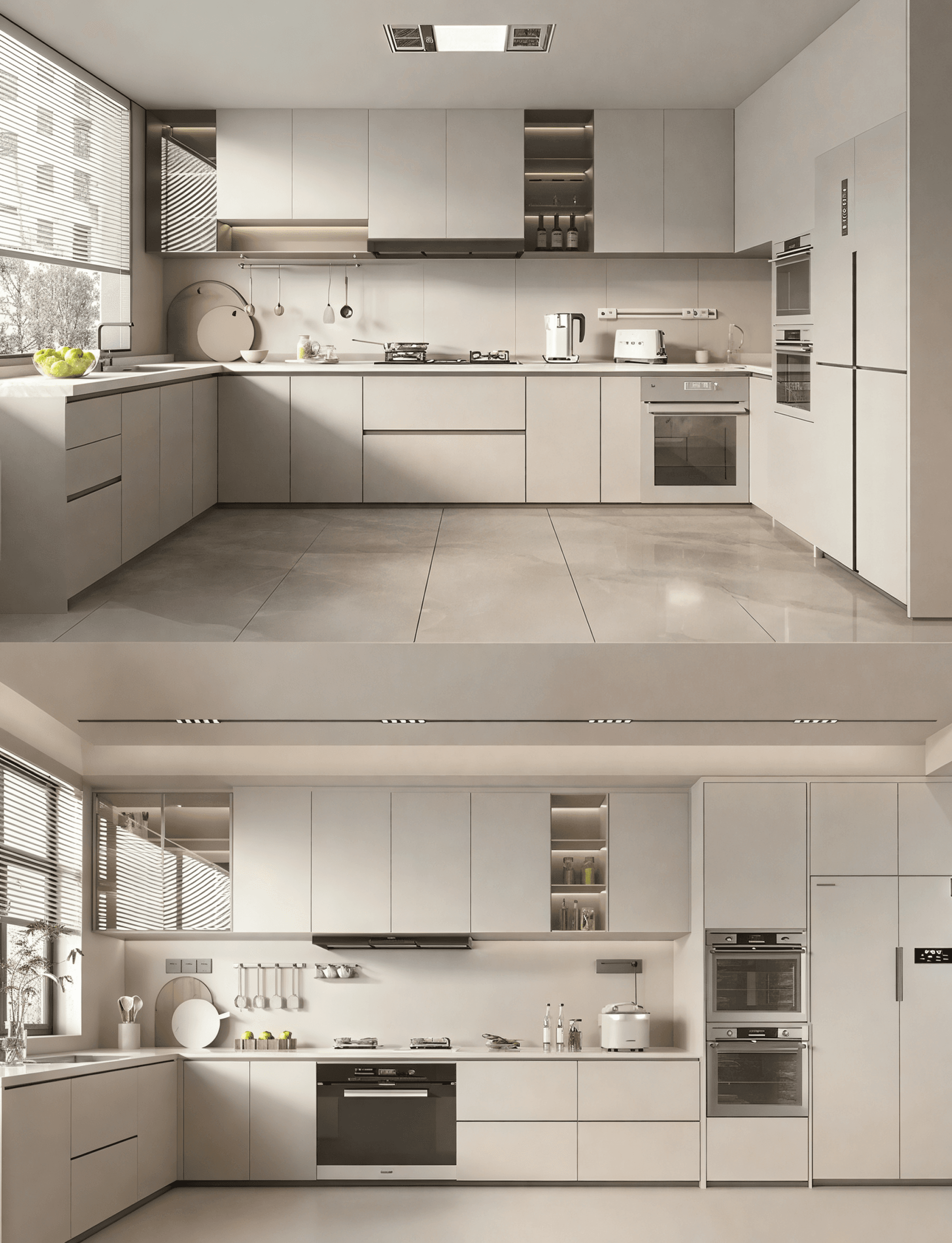
Kitchen Flow and Work Zones
A functional kitchen is organized by task zones rather than appliances alone.
Core Kitchen Zones
Prep Zone: Sink, counter space, trash
Cooking Zone: Range, oven, ventilation
Cleaning Zone: Sink, dishwasher
Storage Zone: Pantry, refrigerator, dry goods
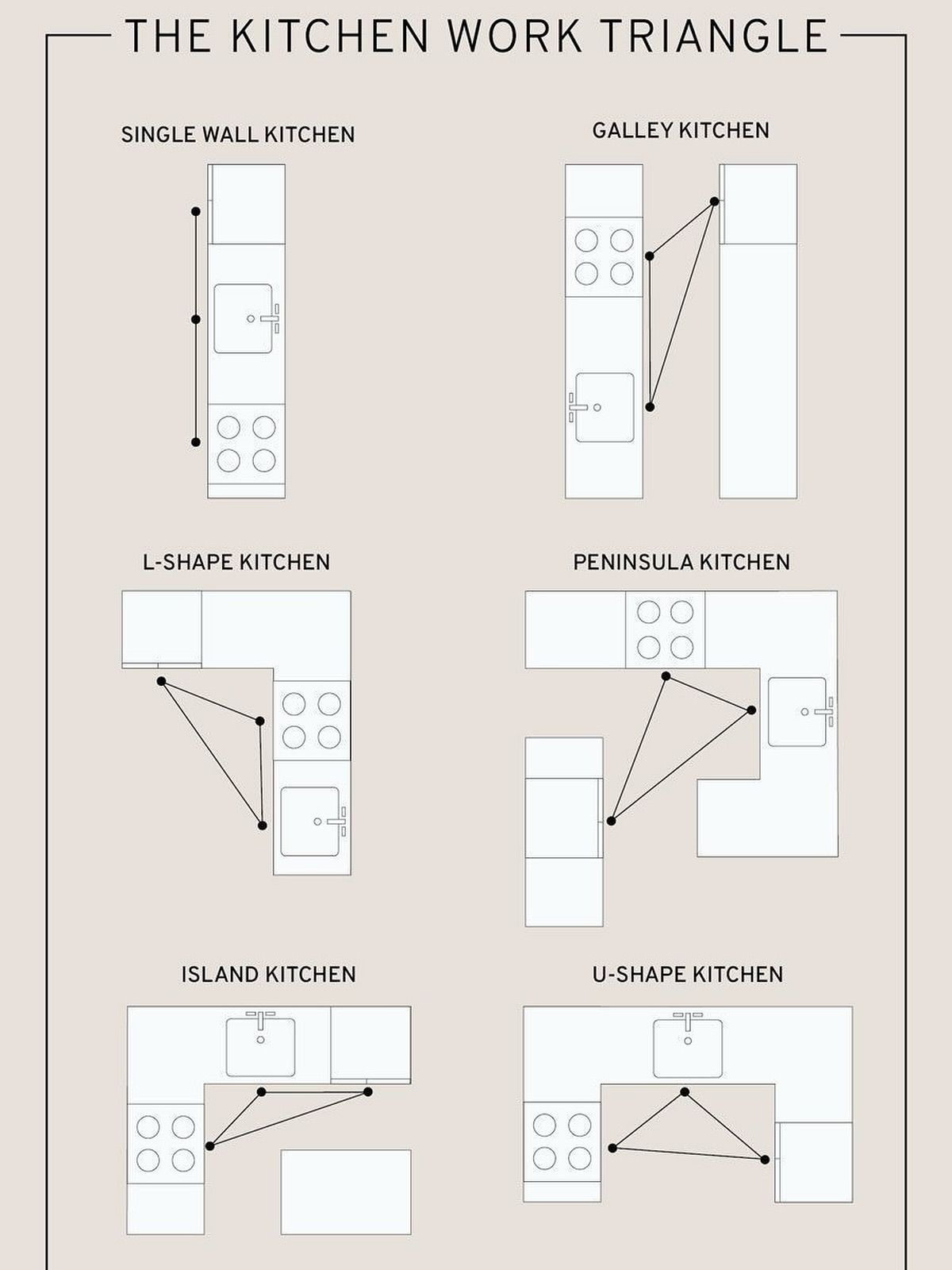
The classic work triangle still applies but has evolved into zone-based planning, especially in larger kitchens.
Best Location for Appliances
Appliance placement should support workflow, clearances, and safety.
Placement Guidelines
Refrigerator near entry for easy grocery unloading
Dishwasher adjacent to sink
Range separated from refrigerator by counter space
Wall ovens placed at ergonomic heights
Clearance Considerations
Appliance | Recommended Clearance |
|---|---|
Refrigerator | 36–48 inches in front |
Dishwasher | 21–24 inches aisle space |
Range | 12–15 inches counter on one side |
Island Seating | 36 inches minimum behind stools |
Material Selection Best Practices
Beyond appearance, materials should be evaluated for performance and lifespan.
Evaluation Criteria
Resistance to moisture and heat
Ease of cleaning and repair
Compatibility with existing structure
Availability and lead times
Tip:
Avoid selecting all finishes from a single showroom display. Materials should be reviewed together under similar lighting conditions.
Quality Differences in Kitchen Components
Not all cabinets or materials are built the same, even when they look similar.
Cabinet Quality Indicators
Plywood box construction vs. particle board
Dovetail drawer joints
Soft-close hinges and slides
Adjustable shelving systems
Countertop Fabrication Quality
Seam placement
Edge profile consistency
Undermount sink support method
Price Differences and Budget Ranges
Kitchen remodel costs vary widely based on scope and material choices.
Typical Cost Ranges (Mid-Range Project)
Component | Percentage of Budget |
|---|---|
Cabinets | 30–40% |
Countertops | 10–15% |
Appliances | 15–20% |
Labor & Installation | 20–30% |
Design & Permits | 5–10% |
Lower-cost materials often trade longevity for upfront savings. Higher-end options typically reduce maintenance and replacement costs over time.
Installation Difficulty and Construction Impact
Some materials and layouts increase installation complexity, which affects labor costs and schedule.
Installation Complexity Comparison
Element | Difficulty | Impact |
|---|---|---|
Custom Cabinets | High | Longer lead times, precise installation |
Quartz Countertops | Medium | Requires templating and skilled fabrication |
Porcelain Slabs | High | Specialized cutting and handling |
Laminate Counters | Low | Faster installation |
Appliance Relocation | High | May require electrical, plumbing, or gas modifications |
Construction Note:
Early coordination between designer, contractor, and fabricator reduces delays and costly revisions.
Final Thoughts
A successful kitchen remodel is the result of informed decisions rather than isolated choices. Materials, layout, color, and construction methods all work together to shape how the space performs and feels over time.
Careful planning, realistic budgeting, and thoughtful material selection lead to kitchens that remain functional, durable, and visually cohesive for years to come.